Moonkyte

One of the most engaging and consistently surprising British acid-folk LPs has never been reissued, rarely gets mentioned in round-ups of the field, and probably only troubles collectors of UK early 70s folk-rock curios these days. Bradford band Moonkyte's album 'Count Me Out', was issued in 1971 on the ephemeral Mother label in an intriguing spiral die cut church sleeve, and subsequently in Germany on Metronome (a better pressing, but without the die cut sleeve). Like so many albums release in the waning phase of the folk-rock movement, it came and went leaving an impression on a lucky few only. Now, for folks who have devoured records by the likes of the Incredible String Band, COB, Forest and Spirogyra, albums like 'Count Me Out', form a fruitful avenue for further exploration into the lost canon of UK underground head music, sitting comfortably in the pile by the record player with congruent curios by bands like Fuschia, Jan Dukes de Grey and the Sun Also Rises. The line up on 'Count Me Out' points clearly to the treats in store for the listener. Dave Foster plays guitar, harmonica and contributes vocals. Trevor Graven plays bass and contributes vocals. Mick Humphreys plays drums, and Dave Stansfield steers the 'Kyte on harmonium, percussion and vocals. The core membership is augmented by Dave Ambler one sitar, banjo, flute, and keyboards. The many instrumental options available allow for a deceptively spare, but in reality quite layered and intricate sonic landscape.
'Count Me Out' starts out with the beautifully ambling 'Search'. To a rhythm that evokes the unhurried progress of a horse-drawn cart, the listener is advised to "Take a dose of solitude" and "Look to the skies" among other things, most of which connect to the prevailing hippie desire to map out a spiritual and anti-materialistic aesthetic space. The swooning, off-kilter harmonies are a harbinger of deep strangeness yet to come, suggesting acid-altered auditory perception. It's a fine way to get off the mark, backed up in equally promising style by 'It's the Same Thing'. Following on thematically and sonically from 'Search', the track is a shuffling stoned ambulation that ponders the difficulties of parsing reality while tossing out jocular paradoxes like "Running 'round in circles/With your feet nailed to the ground". The keening harmonium line and daftly ironic backing harmonies burrow nicely down to the basal ganglia, releasing floods of endorphins in the process. Reference points in order of orbital distance would be Forest, COB and the Incredible String Band, though Moonkyte seems further from folk and deeper into damaged drug-experimentation than any of these contemporaries. The record finds its mojo in a big way with one of the great sitar headswirlers, 'Way Out Hermit'. Accompanied by droning bass and hissing cymbals, Dave Ambler's excellent sitar work builds a spidery moonlit staircase to the top of a mystical tor while Stanfield's zoned vocals weave skeins of mist around all. Unfolding like a lotus petal, its acid folk at is most inwardly focused and levitational, immaculate in both conception and execution. 'The Girl Who Came out of My Head' is regularly cited as an exemplar of this album, and so it is, though it's quite similar structurally to the opening tracks, as well as being somewhat Barrett-esque. Much better is 'Tapestry Girl', an alien vignette mastered so quietly one almost has to strain to hear its intricate cyclical melody and vaporous instrumentation. It morphs skillfully into 'Bridge Song', linked by similar melody and arrangement, flutes and bells reminding one a little of the Trader Horne LP 'Morning Way'. The flipside consolidates the fine work on side one. 'Where Will the Grass Grow' is nice companion piece to 'Way Out Hermit', 'Lost Weekend' mirrors 'It's the Same Thing', though possibly hasn't worn as well. 'Blues for Boadicea' matches the mythic resonance of its subject matter with an unadorned arrangement and stately, ritualistic melody. 'Happy Minstrel' is a throwaway track that the band would be happy to be used as landfill now, but the much compiled 'Jelly Man' finishes off the record with a deranged brown acid hallucination that hilarious, disturbing and naggingly catchy. Though memorable, it's an oddity here, almost like a stab at a Donovan style psych-pop single.
All-in-all it's a thoroughly marvellous slice of early 70s acid-folk strangeness, and, with a reissue in the wings (with bonus tracks culled from an unreleased second album), what better time to have a chat with Dave Stansfield? Dave Foster pops in and adds his thoughts at here and there as well.
PT = Tony Dale. DS = Dave Stansfield. DF = Dave Foster
PT. What kind of local scene did Moonkyte come out of? What were those days like:
DS. I'd managed Bradford bands including The Midnight Train, Fresh Garbage, Candy Box and The Broomdusters. I also promoted large concerts at The St. George's Hall in Bradford and booked bands like Deep Purple, Black Sabbath, Family, Free and so on. My wife and I ran a blues club on the outskirts of the city called Bluesville from 1968 to 71. We had a wide range of bands and artists and the club became nationally renowned. Alexis Korner used to play and stay at our house. My dear wife Chris, who I've been married to for over 40 years was, and still is, a superb cook. Alexis recommended that others come to stay for the food alone. These included Free, Aynsley Dunbar, Keef Hartley, Michael Chapman, Stefan Grossman, Duster Bennett and so on. We became friends with most of them; particularly Alexis and Free. Champion Jack Dupree lived just over the hill in Halifax and often used to pop over for tea and substance. I remember we'd once booked USA blues pianist Curtis Jones. He camped out at our house and declared that I was now his manager. Shit! One day he just left saying: "I'm off to Morocco where you can all the dope you can smoke and a woman for a $ a day!" Never saw him again poor soul. I also remember that Chris and I had our first real experience of racism with Curtis. We were turned away from a Chinese restaurant in Huddersfield just because he was black. It was very upsetting and we've never forgotten it. I think that's one of the reasons why we've both spent time in our lives working with people from ethnic minority backgrounds.
PT. So Alexis
Korner was an influence?
DS. Alexis was a real mentor to me. I never, never realised he was quite
fucked up at times until I read his biography in 1996. He turned me on to
things including the finest of sacramental substances. He never put tobacco
into a spliff and at ten in the morning some fine Lebanese would really
clear your head or so I thought. I sometimes roadied for him. That was a
psychedelic experience in itself!
PT. Were there other bands before Moonkyte? Other influences?
DS. I'd befriended Bangladeshis and Jamaicans (god bless Huey) earlier in life and so was well versed in Charas and Ganja. I also got into Bluebeat, Reggae and Asian religious music. I'd also been a singer in a pro band called Dave Adams (I was that man!) and The Belairs and load of semi-pro bands before that. We toured throughout the UK and won a national group competition. We won studio time in Abbey Road Studios Number 2. We'd ditched our manager Benny Kirsch and, after two numbers, were all set to get signed, but in burst Benny shouting: "These are my boys. These are my boys". Thanks to dear old Benny we didn't get to sign a contract.
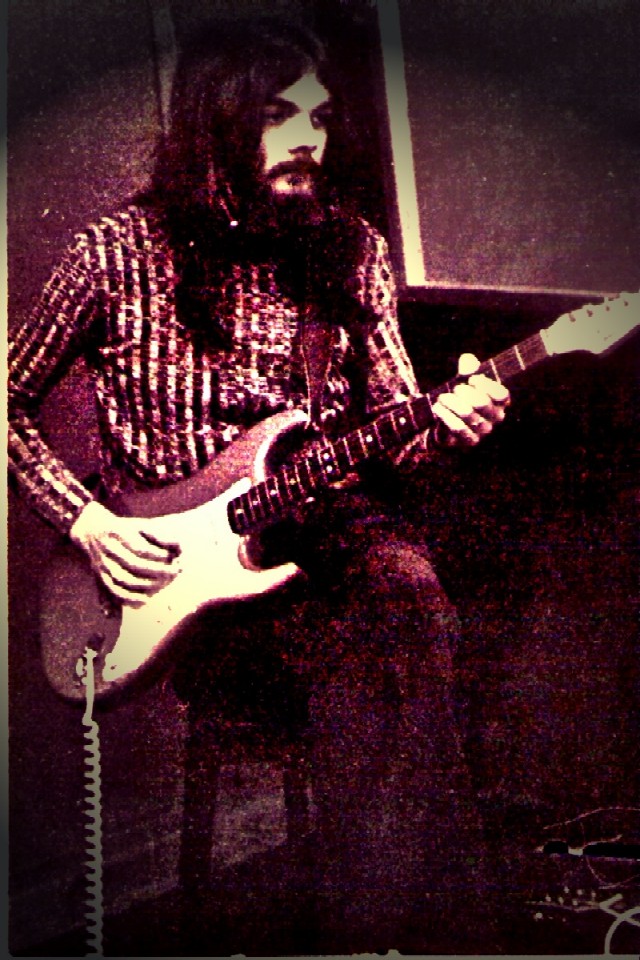
Dave Foster
 PT.
How did Moonkyte itself come together as a unit?
PT.
How did Moonkyte itself come together as a unit?
DS. I met Dave Foster one day. He was younger but he was sharp and I knew at last I'd found a kindred spirit. Flash bugger too in his Breton tee-shirt, cowboy boots and guitar slung over his back. He was a guitarist and harp player. He was a blues kid who turned into a blues man and an acknowledged expert in the genre.
DF. Dave Stansfield offered me a job at thirty bob a week plus half the door takings at two of his club nights. He said we should write some songs together. I wasn't sure at first and was a bit skeptical about my ability to move out of the 12 bar, 3 chord world in which I was engrossed with my band Turnpike. What made it easy to crossover were Dave's lyrics. Although a bit younger than Dave Stansfield, I started listening to music big time around 1963. It was Sonny Boy Williamson, Bo Diddley, Muddy Waters and then Bob Dylan and Robert Johnson. I liked people who wrote new tunes like The Kinks and Captain Beefheart. I started to sing because no one else would, so like Dave before I became a front man with a few guitar licks in hand. Black music was a big influence on Stansfield. He's been on the road with the likes of Duffy Power, Viktor Brox and so on and was part of that whole beat scene. You can hear both our influences on 'Count Me Out' There is Delta slide on 'Blues for Boadicea' and a lot of vocal links were cry and holler. The harmonium was also very churchy.
DS. We spent many evenings composing songs on the top of a large rock called Druid's Altar which overlooks Yorkshire's Aire Valley. We met a guy called Dave Ambler who turned us both on to various forms of music and more substances. Roy Harper and the Incredible String band impressed me an awful lot but we were never influenced by them even if Harper's 'Stormcock' LP and COB's two albums are still three of my favourite albums. Ambler, who I guess you could call a multi-instrumentalist, had unlimited access to Strawberry Fields. A friend of his at University in Scotland manufactured it. I can't remember how many microdots but it was pure and strong. Ambler also had access to Mescalin and Peyote. Take those with Thai Stick, Nepalese Temple Ball, Pakistani Gold Seal, Turkish Pollen Moroccan and Lebanese so you can see where we were coming from. I remember a merchant seaman befriended Dave Foster and I and brought us carrier bags full of Durban Poison. He stood over us while were sorted out the stems and seeds. Quite rigid he was and so were we when we smoked it! We didn't indulge to follow fashion or for a laugh and giggle, although we did do that a lot. I think we thought that we were serious spiritual space explorers. We probed and probed and travelled far. We weren't even strapped into our seats. Maybe we should have been.
PT. How did the first album come about?
DS. We decided to go
into a little studio for an evening to lay down some tracks. We scared the
shit out of the owner but he persevered with grace and dignity. Fresh
Garbage, a band I was managing, won a local competition for studio time in
Denmark Street's Regent Sound Studios. James Spencely (Moonkyte "producer")
was in charge but reckoned they were no good. I gave him our tape and
promptly forgot about it. A couple of weeks later he called me and asked if
our band was gigging. I thought "What fucking band?", but told him "Yeah
loads". We'd never contemplated a gig in our lives. We got an experienced
bass player, Trevor Craven, and drummer Mick Humphreys and recorded the
album in a matter of days with an assortment of freaks and 'wizards' singing
some note or other. The singer from The Fortunes, who worked at a studio
over the road, did some background vocals on one track. I was told this
afterwards!
DF. Unfortunately we were not involved in the mixing on the first LP but the
effects, reverbs etc. were worked out in Bradford before hand by us on acid.
All the production tricks on the first LP were Dave's so I guess it was
Stansfield with Foster as assistant producer. James Spencely hooked it all
up as engineer.
PT. How did the album get released, and what was the Mother label all about?
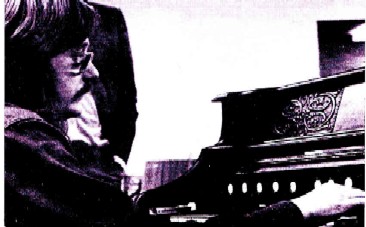
DS. The album was released on the Mother label. It was Emperor Rosko's label. We launched the label and closed it. Our LP was numbered SMOT 1 and I don't think there was ever a SMOT 2. John Peel wrote the sleeve notes. He displayed a loyalty to the north of England mainly because his wife, then known as 'The Pig', came from Shipley in West Yorkshire. He was a lovely man. He used to play records on the radio for our daughter Emma. In later years he'd play the odd Moonkyte track on his radio programme. We'd retrieved our publishing to Dave's Endomorph Company and we actually received royalties from the airplay!
Dave Stansfield
PT. Did you tour the album at all?
DS. We didn't gig much. We did a few open air festivals with other bands and that was fun. But being booked at some venue as the only band was traumatic. It's a big responsibility for people to pay just to see you and, let's say, we were often a little untogether.
PT. How
did you manage to get a release on the German Metronome label and what was
the relationship with EMI?
DF. I didn't know anything about that but if I had a label and had a band
that didn't sign anything I'd assume it would be legal to issue the record
anywhere. I would think that James Spencely and Rosko would have done a
label deal with EMI for Mother; paid John Peel for the sleeve notes and kept
the rest. Yep, I guess that's what happened. EMI would have been accountable
to the label and not the artists. No doubt world licensing would have been
granted.
PT. When I listen to Moonkyte now, it sits nicely in a scene in my head with bands like Fuschia, Jan Dukes de Grey and Spirogyra. How much were you aware of these bands, or indeed have any interaction with them at the time?
DF. I only know of two of the bands. Spirogyra was later than us and Jan Dukes De Gray, a Leeds band, were managed by Danny Pollock and Stuart Frais who were rivals in the agency business. We would not have listened to them on principle. They had an album out the year before us. I think they were on mid-price Decca. I remember the sleeve. It was red. We were on full priced EMI with sleeve notes by John Peel. At the time of the first LP all our influences were in place and jumbled up. They were packed away in our sub-conscious. A Pandora's Box was opened up with our psychedelic experiences in a 2 track studio in Shipley - that did it for me. Bring on Moonkyte.
PT. Can
you talk a bit about the recording of the unreleased second album, and the
event surrounding that?
DS. We were soon asked back to London to record the second album, which was
to be called Cuckoo. Dave Ambler had gone and so had Mick the drummer. It
was a different atmosphere altogether. The summer of love was well and truly
over for us and dark forces and substances had crept into the picture. I
think I'd opened too many windows in my head and was invited to attend the
local mental institution. What did they prescribe? Mandrax!! Thought it was
good at the time but when you're on downers you somehow get sucked into a
seedy side of life. But I wouldn't have missed the experience for anything.
To be treated by a bunch of guys whose messiah was Freud; a coke addled sex
maniac, was an education. These guys needed serious counselling. I did what
I could to help but they were beyond redemption.
Somehow Moonkyte had become a proper band. We'd drafted in Kaboss on drums. He'd had his own heavy rock band Dawnwatcher and he was an aspiring wolf in elves clothing who had the social skills of a boy racer from Scunthorpe. Everybody wanted to write and sing with little success. Most of the songs were good but dark and the vibe in the studio was not pleasant.
Then, believe it or not, they wanted a single. I wrote one which was crap but it was the type of crap that could have sold a bundle. We recruited a violin player for the session. He'd never sampled sacramental susbstances before and, for the journey, someone gave him a month's worth to munch and swallow. He loved it at first and then demon's came spilling out. He screamed and screamed. Our roadie, a speed freak Canadian who later hanged himself, was shouting. "Throw him outta the fuckin' car".
We arrived at the studio to be greeted by a new producer. Somebody told me that his claim to fame was being an engineer on The Stones 'High Tide and Green Grass'. He wasn't impressed with our substance consumption and even less impressed with a violin player who was frothing at the mouth. But we got through the session. The single or second album was never released.
PT. So that was the end for Moonkyte?
DF. After the first LP was released the bass player (see below) started to get quite horrible with me. He wanted to be the star of the show. More importantly he wanted to cut his tunes first, play all the leads and sing them as well. It got too much. He really didn't like me much and worked on Dave who didn't like him much either. Dave sacked him and I was back. We changed our name to Tibet with Kaboss still in tow. We had a big gig booked in Keighley. We had poster with pixies on mushrooms smoking hookas. There was a huge bust. Soon after that we drifted apart as a musical team but now, after decades, we're back together.
DS. Moonkyte was never formally disbanded. We just drifted apart. Now that Dave and I are close again I guess Moonkyte still exists. Bring on the gigs! A support slot to Super Furry Animals would be just fine. I love 'em.
PT. So what did life after Moonkyte hold for you?
DS. I
started to work for a living as a community worker and an Oxfam worker
before going to University to get a fine degree in Peace Studies. I then
became a college lecturer before going to live in Italy to become a
writer/journalist. I worked for Billboard, Hollywood Reporter and other
magazines. I also worked for BBC 1 programme Saturday Night Clive (Clive
James) and Dutch station Radio Netherlands. After getting ill we came back
to England where I worked for London's Spectrum Radio. I got to know a lot
of Asian artists and worked with them. I also wrote lyrics for Italian and
Asian artists. Some became hits in continental Europe! We then returned to
the north of England.
Dave Foster got into blues distribution, set up his own indie labels
American Activities and Unamerican Activities, and became a publisher and
artist manager.
We are now working together on art books. He's become quite an expert and it's his bloody passion. I've also just finished a children's adventure book called 'The Amazing Adventures Of Boogie One Shoe and Munch The Mouse' and have started on the second titled 'Raku And The Boy'.
Contact the two Daves by email:
moonkyte@inspinmusic.com
© Tony Dale, for terrascope.online - September 2005
| UPDATE November 2008 | ||
|
|
Trevor Craven ("the bass player" referred to above) got in touch with the Terrascope and asked us to publish his take on things, which we are of course more than happy to do. Over to you, Trev!
I couldn’t believe it when I saw the Moonkyte
website! I had been looking for Dave Stansfield, who I new would be
writing, and his book website led me to the main Moonkyte website -
and then onto the Terrascope site where I found the earlier
interview with the two Daves.
|